summer, before the first attack
The Maple-Tree Idyll
[Lily Sundelin](entity:character-recall-character-lily-sundelin-c486ce6a4bdc) prepares a chicken-and-chanterelle quiche while eight-month-old [Margrete Sundelin](entity:character-recall-character-margrete-sundelin-c121f3e7bc2f) sleeps in her pram beneath the maple tree. She feels secure in her marriage, home, and bond with her daughter, convinced that she would sense any danger to the child.
While Lily and [Karsten Sundelin](entity:character-recall-character-karsten-sundelin-eb92362a6725) are distracted by their dinner and each other, a stranger emerges from the woods, shifts the blanket, and covers Margrete with blood. The attack violates the very security Lily believed her maternal bond guaranteed.
the same summer evening
The Bloodied Pram
After dinner, Lily goes to fetch Margrete and finds the blanket crumpled and the baby drenched in dark blood. She collapses screaming; Karsten rushes to the pram, takes their daughter, and orders Lily to bring the car.
They race to the [Central Hospital](entity:location-recall-location-central-hospital-0a406756bcdc), terrified that Margrete is dying. Nurses examine her and return her unharmed: the blood is not hers, and the police have been called. The family has suffered a calculated assault on its sense of safety, even though the child’s body is untouched.
the night of the first attack
The First Police Interview
[Konrad Sejer](entity:character-recall-character-konrad-sejer-1f648ef47f9f) and [Jacob Skarre](entity:character-recall-character-jacob-skarre-151f018349f7) interview the shaken parents at the hospital. Karsten is furious and threatens to take matters into his own hands, while Lily clutches Margrete and struggles to imagine that the family could ever feel safe again.
[Sejer](entity:character-recall-character-sejer-dcd4ee9c19d3) asks them to write down everything they remember and promises a garden search. Before leaving, he reminds them that Margrete does not understand what happened. His calm response offers some comfort, but the investigation has no clear suspect or motive.
the day after the first attack
The First Crime-Scene Theory
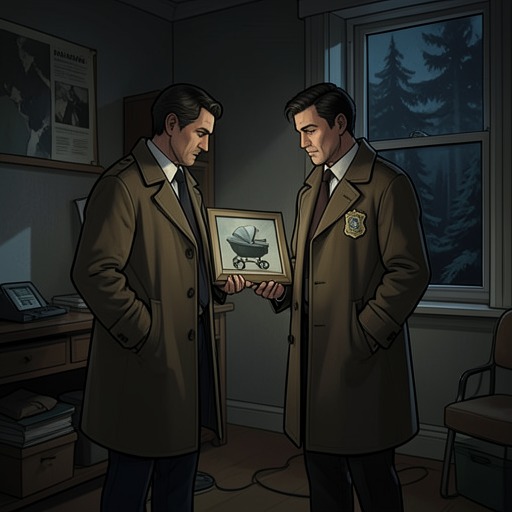
At the Local police department, [Sejer](entity:character-recall-character-sejer-dcd4ee9c19d3), [Skarre](entity:character-recall-character-skarre-19c9ceebeea5), and [Holthemann](entity:character-recall-character-holthemann-0271b8ae1809) reconstruct how the attacker might have reached the pram from the neighboring estate of [Askeland](entity:location-recall-location-askeland-def017313504). The assailant appears to have watched the family and chosen the moment when Lily could not see the garden.
They consider revenge, jealousy, and mental instability, but agree that the attack seems planned rather than impulsive. Sejer suspects a man who is socially neglected and hungry for recognition, though he admits that the portrait is speculation rather than evidence.
the first day after the attack
The Public Appeal
Reporters gather outside the station, drawn by the shocking story of a baby found soaked in blood. [Sejer](entity:character-recall-character-sejer-dcd4ee9c19d3) gives a restrained statement, wary that publicity might reward the person responsible with the audience he seems to want.
In private, Sejer tells [Skarre](entity:character-recall-character-skarre-19c9ceebeea5) that the perpetrator may be staging events for attention. He also confides his concern about his grandson [Matteus](entity:character-recall-character-matteus-156c0f5fd3c1) auditioning for a lead role at the [Opera ballet school](entity:organization-recall-organization-opera-ballet-sch-67a7384d425c), revealing how personal hopes and anxieties coexist with the investigation.
late on the evening after the attack
The Wolverine Threat
After [Sejer](entity:character-recall-character-sejer-dcd4ee9c19d3) appears on television, someone leaves a blank envelope on his doormat. He spots a fast, slender young man hurrying away, then opens the envelope and finds a wildlife postcard bearing the message, “[Hell begins now](entity:expression-recall-expression-hell-begins-now-0e988cbff139).”
The image of the wolverine suggests a predator’s identity or self-image, but Sejer keeps the discovery from the press. The threat makes clear that the attacker has expanded his attention from the Sundelins to the investigator himself.
early in the weeks-long campaign
Johnny’s House of Resentment
Seventeen-year-old [Johnny Beskow](entity:character-recall-character-johnny-beskow-8e927de336d4) watches his alcoholic mother sleep and broods over the father she has never identified. He experiences contempt and fantasies of violence as proof that he can still feel something, while his neglected home reinforces his belief that he is invisible to everyone else.
Thinking about the bloodied baby and the Sundelins’ newly awakened fear, Johnny takes satisfaction in having forced a comfortable family to recognize danger. His private sense of power begins to turn into a campaign of deliberate intimidation.
soon after the first attack
A Vandal’s First Escalation
Riding his red moped, Johnny reads the newspaper coverage and enjoys Karsten’s angry warning to whoever harmed his family. He then urinates in the [Sparbo Dam](entity:location-recall-location-sparbo-dam-ec2d3bd04536), relishing the thought that a private, degrading act can touch thousands of people through their drinking water.
His actions show how he treats ordinary life as material for provocation. He can frighten strangers and contaminate a shared resource without revealing himself, while imagining that the community is finally forced to notice him.
early in the campaign
Grandfather and the Red-Plaited Girl
Johnny visits [Henry Beskow](entity:character-recall-character-henry-beskow-2bde6dc5a373), his frail grandfather, and helps him with errands and company. On the way he trades insults with the red-haired girl [Else Meiner](entity:character-recall-character-else-meiner-590ace3644cc), who watches the street from her knoll and calls out at passing riders.
Henry describes Else as a sharp-eyed neighborhood guardian. Johnny’s irritation at her taunts grows, while his visits to Henry reveal the one relationship in which he feels useful, trusted, and needed.
early in the campaign
The Poison in the Pantry
While tidying Henry’s pantry, Johnny discovers a box of rat poison and studies its instructions. He hides it under the seat of his moped, attracted by the possibility of having a lethal tool available.
The discovery foreshadows a more consequential use of poison and adds to the growing danger around Henry’s vulnerable household. For now, Johnny keeps the box as a secret option rather than acting on it.
the first days after the attack
The Missing Pink Smock
At home, Lily and Karsten keep Margrete close, discard the blood-soaked pram, and buy a new, expensive one. Karsten proposes that Margrete sleep on the veranda, but Lily cannot yet imagine letting the child out of her sight.
Lily remembers that Margrete’s pink smock disappeared during the attack. Its removal feels more disturbing than a random disturbance, as if the assailant took a personal trophy. The loss gives [Sejer](entity:character-recall-character-sejer-dcd4ee9c19d3) a specific clue and deepens the parents’ conviction that the attack was deliberate.
the first days after the attack
The Blood at Spar
Following the trail of the wolverine postcard, [Sejer](entity:character-recall-character-sejer-dcd4ee9c19d3) visits the [Spar](entity:organization-recall-organization-spar-ce0414075411) supermarket beside [Lake Skarve](entity:location-recall-location-lake-skarve-20660050fc74) and finds similar animal cards for sale. He begins to suspect that the sender lives nearby and may have bought the postcard there.
In the newspapers, the blood-soaked baby story has become a sensation. Sejer recognizes that the attacker may be enjoying the publicity, but he has no proof linking the shop, the postcard, and the assault.
during the early weeks of the campaign
The Fake Birthday Obituary
Johnny uses [Gunilla Mørk](entity:character-recall-character-gunilla-m-rk-a6c4a2eed6e1)’s birthday notice as the raw material for a fabricated obituary, inventing her death and a funeral announcement. He sees how easily a newspaper notice can provide a stranger’s name, age, family, and town.
Gunilla reads the announcement at breakfast and is horrified to find herself declared dead. The false notice turns a small piece of public information into an intimate assault, and shows that Johnny can make ordinary institutions spread his deception.
the day Gunilla finds the notice
The Obituary Investigation
Gunilla’s children, Erik and Ellinor, bring the newspaper to [Sejer](entity:character-recall-character-sejer-dcd4ee9c19d3) and report how badly their mother has been shaken. Sejer discovers that her birthday notice supplied the details needed to construct the fake obituary.
The newspaper admits that summer staffing disrupted its normal checking process. Sejer advises the family to reassure Gunilla that she was chosen at random, while privately recognizing a new method in the campaign: the offender uses public information to make invented events feel personal.
during Sejer’s visit to Gunilla
The Boy at Gunilla’s Door
Gunilla recalls turning away a young visitor who claimed to be a Polish student looking for work. He spoke poorly and had written an introduction on an old pizza box, but the shock of the obituary left her unable to remember his appearance.
The encounter becomes one of several uncertain sightings of a polite young man on a moped. [Sejer](entity:character-recall-character-sejer-dcd4ee9c19d3) cannot yet establish that the visitor was Johnny, but the detail will help him assemble a profile of the attacker.
late summer, after the fake obituary
The Orange Sheep
During a walk in the woods, [Hannes Bosch](entity:character-recall-character-hannes-bosch-0a739db29dca) and [Theo Bosch](entity:character-recall-character-theo-bosch-5ce416c06478) spot an orange-colored sheep among a flock near [Snellevann](entity:location-recall-location-snellevann-2ca34666e2d5). The animal has been sprayed, and Hannes calls the local paper so Theo can tell the story and appear in a photograph.
The stunt is humiliating and potentially harmful to the sheep, but its theatrical quality resembles the earlier attacks. It gives [Sejer](entity:character-recall-character-sejer-dcd4ee9c19d3) another possible episode in a campaign whose perpetrator seems to want an audience.
soon after the orange-sheep report
The Search for Frozen Blood
[Sejer](entity:character-recall-character-sejer-dcd4ee9c19d3) and [Skarre](entity:character-recall-character-skarre-19c9ceebeea5) visit [Sverre Skarning](entity:character-recall-character-sverre-skarning-0fd214fda209)’s farm, where the sheep has been shorn and its runny eyes suggest chemical irritation. Skarning says someone also left the gates open, scattering his flock across the roads.
At the [Spar](entity:organization-recall-organization-spar-ce0414075411) supermarket, the investigators discover frozen ox blood for sale and ask staff whether anyone recently bought it. One cashier remembers a customer purchasing a package, though she cannot identify him. The blood supply offers a possible source for the substance used against Margrete.
after the first attack
The Zimmer Frame in the River
Lily and Karsten take Margrete out in her pram, trying to resume ordinary walks while remaining watchful. At a bridge, Lily fears that an object in the river is another pram, but Karsten recognizes a Zimmer frame and dismisses the possibility of a person in the water.
Even an unrelated sight now activates Lily’s terror. The attack has changed the family’s ordinary surroundings into a landscape of possible threats, while Karsten begins to respond with anger rather than reassurance.
during the weeks after the first attack
Johnny’s Domestic War
At home, Johnny’s mother criticizes him and resents the money Henry gives him. Johnny keeps a newspaper notice for a future scheme and imagines grotesque ways to punish the woman he calls a hyena.
He treats his mother’s cruelty and neglect as permission to make other people suffer. His fantasies do not explain away his choices; they reveal how his grievance is becoming a private moral system in which retaliation seems deserved.
later in the weeks-long campaign
The Fake Funeral Call
Johnny watches [Astrid Landmark](entity:character-recall-character-astrid-landmark-0d8051740869) care for her husband, [Helge Landmark](entity:character-recall-character-helge-landmark-d008f6ce4e8f), whose ALS has left him severely weakened and dependent on her. He phones the funeral home and falsely reports Helge’s death, arranging for a hearse to be sent to the house.
The hoax targets a couple already living under the shadow of death. Johnny’s scheme brings the feared future to their door while exploiting the trust that allows a funeral home to respond to a supposed doctor’s call.
the day of the false funeral call
The Hearse at the Landmark Home
A hearse arrives at the Landmark home, and the funeral director tells Astrid that he has been summoned to collect Helge. She insists that her husband is alive and discovers that the supposed doctor who reported the death does not exist.
Helge asks to meet the funeral-home men and turns the humiliating visit into a moment of connection, discussing their Daimler limousine and reserving a future ride for himself. The encounter gives him a brief return of agency even as it reminds the couple that death is approaching.
later on the day the hearse arrives
Sejer Questions the Landmark Visitor
[Sejer](entity:character-recall-character-sejer-dcd4ee9c19d3) interviews Astrid and Helge about the false death report. Astrid remembers that a young man came to ask directions shortly before the hearse appeared, but she cannot recall his face or clothing.
Helge remembers a crucial detail that his wife missed: the visitor left on a moped. The detail strengthens Sejer’s belief that a young local rider is moving between targets and watching his pranks unfold.
later in the campaign
The False Hospital Alert
Johnny waits until [Frances Mold](entity:character-recall-character-frances-mold-843874fa2acc) rides away on her scooter, then calls her mother, [Evelyn Mold](entity:character-recall-character-evelyn-mold-d11ab817058c), with a false report that Frances has been seriously injured and taken to hospital. Evelyn rushes to the [Central Hospital](entity:location-recall-location-central-hospital-0a406756bcdc), where no one can find a patient by that name.
A perceptive information-desk worker helps Evelyn realize that the call may be another hoax. Evelyn reaches Frances by phone and learns that her daughter is safe, but the fear has already shaken their close relationship and made Frances’s scooter feel newly dangerous.
after the false hospital alert
The Hospital Profile Clue
[Sejer](entity:character-recall-character-sejer-dcd4ee9c19d3) speaks with Evelyn and Frances and learns that a local newspaper had recently profiled Frances and printed her name and town. He concludes that the caller likely selected them through public coverage, watched the house, and anticipated Evelyn’s arrival at the hospital.
The episode fits the emerging pattern: Johnny gathers details from newspapers, creates a false emergency, and may travel to observe its effects. Sejer’s theory remains unproven, but each new incident narrows the kind of person he is seeking.
several weeks after Margrete’s attack
The Sundelins’ Fraying Marriage
Lily remains constantly alert to Margrete’s safety, while Karsten struggles to accept a life governed by fear. He grows more aggressive and argues that swift punishment would deter criminals; Lily insists that the authorities must handle the matter.
Karsten’s anger becomes a source of strain rather than protection. He imagines revenge and resents Lily’s vulnerability, while Lily retreats further into guarding their child. Their marriage begins to fracture under the burden of a danger neither can control.
during Thursday band practice, late summer
The First Attack on Else
Else’s repeated insults and Johnny’s growing fixation culminate in his attack along the [Love Trail](entity:location-recall-location-love-trail-3c08ae68a0c8). Wearing a [Gorilla mask](entity:object-recall-object-a4c07fb331f9) and carrying his army knife, he ambushes her as she cycles home from [Thursday band practice](entity:time-recall-time-thursday-band-practice-c9f654eb2d88).
Else fights back, bites his arm, and resists being subdued. Johnny pins her down and cuts off her red braid before fleeing with it as a trophy. The attack marks a sharp escalation from remote hoaxes to direct physical violence.
the day after the braid-cutting
Else’s Matter-of-Fact Account
[Sejer](entity:character-recall-character-sejer-dcd4ee9c19d3) and [Skarre](entity:character-recall-character-skarre-19c9ceebeea5) interview Else in her family home. Though her father is furious and expects a frightened victim, Else describes the attacker’s small pocketknife, worn trainers, heavy breathing, and sweet-smelling mask with blunt clarity.
Else does not know who attacked her, but Sejer learns that someone slashed her bicycle tires days earlier. He also notices a cushion in her room embroidered with “I love Johnny,” an unsettling object that links her teasing rivalry with the boy who may be stalking her.
the Thursday after the first braid attack
The Thursday Ambush
Johnny returns to [Hauger School](entity:location-recall-location-hauger-school-45323a567604) while the band rehearses and watches Else with her trumpet. He studies the school grounds, the [Love Trail](entity:location-recall-location-love-trail-3c08ae68a0c8), and possible hiding places, planning to attack her again with his knife.
When Else rides home alone, Johnny leaps from the undergrowth and grabs her. She bites him and struggles fiercely, disrupting his plan. He cuts off her braid as a warning and trophy, then escapes into the woods while she recovers and continues home.
after the attack on Else
Sejer Builds the Moped Profile
By comparing sightings from the Sundelin incident, Gunilla’s doorstep, the sheep farm, and the Landmark home, [Sejer](entity:character-recall-character-sejer-dcd4ee9c19d3) develops a description of a slender young man with a red helmet and a moped. The witnesses remember a polite, unassuming manner rather than an obviously threatening presence.
Sejer’s own dizziness worries him as he considers the possibility of illness, but he continues working. The investigation increasingly depends on connecting scattered details without letting a persuasive story substitute for proof.
during the campaign, before the fatal dog attack
Johnny Loses Bleeding Heart
Johnny discovers that his mother has removed and killed his guinea pig, [Bleeding Heart](entity:character-recall-character-bleeding-heart-da6870bed8b3), claiming it was a dangerous rat. He finds the animal drowned in a milk carton in the food-waste bin and buries it in the yard.
The loss intensifies his hatred of his mother and his sense that his one precious attachment has been destroyed. He buys a hamster to replace the guinea pig, but the new pet cannot undo the grief or the violent fantasies that now shape his thinking.
after Johnny replaces his guinea pig
The Landmark Telephone Lure
Johnny observes Astrid and [Helge Landmark](entity:character-recall-character-helge-landmark-d008f6ce4e8f) outside their home and phones the house, briefly drawing Astrid away from her husband. He watches Helge alone in his wheelchair, then leaves, satisfied that a false call can manufacture helplessness and anxiety.
On his way back, Johnny sees Else at the dam and slashes the tires of her bicycle. His attention shifts between targets, with resentment and the desire to dominate turning even small encounters into opportunities for retaliation.
late summer, on the day of the fatal attack
Theo’s Solo Expedition
Inspired by his hero, the explorer Lars Monsen, Theo asks his father, Hannes, to let him hike alone to [Snellevann](entity:location-recall-location-snellevann-2ca34666e2d5). Hannes secretly agrees, packs food and water, lends him a hunting knife, and walks him to the trail barrier despite Wilma’s objections.
Wilma fears that Theo is too young to be alone in the woods, but Hannes assures her that the route is familiar and safe. His encouragement gives Theo confidence, yet it will leave Hannes consumed by guilt after a catastrophe on the trail.
that afternoon, on Theo’s way back from Snellevann
The Bear in Theo’s Imagination
Theo reaches the water, eats his lunch, and lets his imagination transform the quiet shore into an adventure. He dreams that Lars Monsen arrives by canoe and tells him that a mother bear and her cubs are nearby.
The imagined warning frightens Theo, and he hurries back through the forest. Meanwhile, Hannes and Wilma wait at home, first trusting the boy’s independence and then growing uneasy when he does not call as expected.
late summer, on Theo’s return from Snellevann
The Dogs Attack Theo
Two cyclists find the remains of a small boy near [Skillet](entity:location-recall-location-skillet-5461aa306b9d) on the [Glenna](entity:location-recall-location-glenna-4c4bcf22aeeb) route. The child has been savagely mauled, with parts of his body torn away, and his open rucksack contains Optimus Prime and the remains of his lunch.
[Sejer](entity:character-recall-character-sejer-dcd4ee9c19d3) identifies a pack of dogs as the likely attackers. Hannes and Wilma arrive searching for Theo, and Sejer must tell them that the dead child may be their son. When Hannes calls Theo’s phone, the ringtone confirms the terrible identification.
immediately after the fatal attack
The Bosch Family’s Grief
Wilma collapses when [Sejer](entity:character-recall-character-sejer-dcd4ee9c19d3) tells the parents that Theo is dead. Hannes, stunned and ashamed, cannot bring himself to see his son’s remains and sits holding the [Optimus Prime toy](entity:object-recall-object-optimus-prime-6749a53d8400), unable to operate the simple transformation Theo knew by heart.
The police advise the parents not to view the body. Hannes gives Sejer the names of nearby dog owners, including [Bjørn Schillinger](entity:character-recall-character-bj-rn-schillinger-cab7d5057b50), while Wilma’s grief becomes so severe that she is sedated and continues screaming after she wakes.
the day Theo’s body is found
The Dogs’ Owner
[Sejer](entity:character-recall-character-sejer-dcd4ee9c19d3) and [Skarre](entity:character-recall-character-skarre-19c9ceebeea5) visit [Bjørn Schillinger](entity:character-recall-character-bj-rn-schillinger-cab7d5057b50) at [Sagatoppen](entity:location-recall-location-sagatoppen-7f9c1f23ea84) and find seven [American Eskimo dogs](entity:creature-recall-creature-american-eskimo-dogs-58f75d5b97c9) in their kennel. Schillinger insists that he always shuts and secures the gate, but the dogs have returned wet and freshly washed.
When Sejer tells him that a child has died in a dog attack, Schillinger first asks whether he will lose his animals. The dogs are taken for investigation, and Schillinger claims that someone must have opened the kennel deliberately. The question of responsibility becomes more complicated than identifying the animals.
the days after Theo’s death
The Community Finds a Scapegoat
As the hoax calls stop, people in the area blame the unknown prankster for opening Schillinger’s kennel, despite the lack of evidence. Schillinger insists that he is meticulous about locking the gate, while residents disagree about whether he is responsible or being framed.
Karsten meets Schillinger at a petrol station, and the two angry men recognize their shared desire for revenge. Lily has left Karsten with Margrete, and their private grief and resentment draw Karsten toward a man who may be seeking someone to punish.
after Theo’s death, before Henry’s death
The Poisoned Stew
Johnny’s mother prepares a meal, and Johnny secretly empties Henry’s rat poison into the simmering stew. He imagines his mother dying in agony and leaves the house without knowing how much she will eat.
His mother stores most of the meal in a container rather than consuming it all. Johnny returns later and finds her alive, disappointed that the poisoning has not produced the spectacle or death he wanted. The remaining stew will travel into Henry’s home.
the weeks after Henry’s death
Johnny Under Sejer’s Care
Because Johnny is a minor, he is not held in custody but must report to the police three times each week. He speaks openly with [Sejer](entity:character-recall-character-sejer-dcd4ee9c19d3) about his hoaxes, his resentment, and his neglectful home life, while refusing to change his account of the dog attack.
Sejer begins to act as a steady adult presence, sharing simple meals and asking Johnny to consider the people he harmed. Johnny calls him “Grandpa,” a sign of the attachment he has lost with Henry and the unexpected trust forming between investigator and suspect.
during the investigation of Theo’s death
The Dogs Remain Unproven
Schillinger maintains that someone opened the kennel gate and says he has followed the same locking ritual for years. The police find the kennel secure enough that the dogs could not have escaped on their own if the gate had been shut, but they cannot establish who opened it.
[Sejer](entity:character-recall-character-sejer-dcd4ee9c19d3) believes Johnny’s denial, while [Skarre](entity:character-recall-character-skarre-19c9ceebeea5) remains less certain. The evidence points to the dogs as the attackers but does not reveal whether their owner forgot to secure them or another person deliberately released them.
during the autumn investigation
Sejer’s Fear of Illness
[Sejer](entity:character-recall-character-sejer-dcd4ee9c19d3)’s recurring dizzy spells make him fear that he may have a serious illness. Reading about ALS after Helge’s decline, he wonders whether his symptoms could signal an asymmetric onset, and his thoughts repeatedly turn toward his own mortality.
He eventually makes a medical appointment but continues to postpone confronting the possible diagnosis. His anxiety runs alongside the investigation’s constant exposure to death, strengthening the novel’s concern with the fragility of ordinary life.
October
Matteus Wins the Role
[Matteus](entity:character-recall-character-matteus-156c0f5fd3c1) auditions for the role of Siegfried in Swan Lake, a part [Sejer](entity:character-recall-character-sejer-dcd4ee9c19d3) has worried might be withheld from a Black dancer. When Matteus first tells his grandfather that someone else received the role, Sejer is disappointed on his behalf.
Matteus reveals that he was only teasing: he has won the part. His playful deception makes Sejer consider how affection can make a person believe what he wants to hear, a lesson that bears on the investigator’s confidence in Johnny’s denial.
after the trial preparations begin
Johnny Disappears
Johnny fails to report to the station and stops answering his phone. An officer finds his home empty except for the hamster, while his Suzuki is gone.
[Sejer](entity:character-recall-character-sejer-dcd4ee9c19d3) is disturbed by the disappearance and waits for an explanation that never comes. He feels responsible for the boy who had begun to trust him, even while knowing that Johnny’s actions and choices cannot be made his responsibility.
mid-October
Johnny at the Dam
Police find Johnny floating face down in the water at [Sparbo Dam](entity:location-recall-location-sparbo-dam-ec2d3bd04536), near the place where he had once sat and watched the water roar through the sluice. His moped is parked nearby, and the circumstances leave it unclear whether he fell or entered the water deliberately.
[Sejer](entity:character-recall-character-sejer-dcd4ee9c19d3) wonders whether someone helped Johnny over the edge, but recognizes that the suspicion cannot be proved. The boy’s death ends the immediate investigation into his hoaxes while leaving the central question of the dogs’ release unresolved.
at the ending
Else’s Witness
From concealment near the dam, Else watches two men return from the water and leave in a gold-colored Toyota Land Cruiser. She waits until the car has gone, then retrieves her blue bicycle.
The novel does not reveal who the men were or what they may have done at the dam. Else’s silent observation leaves [Sejer](entity:character-recall-character-sejer-dcd4ee9c19d3)’s suspicion of outside involvement unresolved and closes the story on the possibility that Johnny’s death was not simply an accident or suicide.